
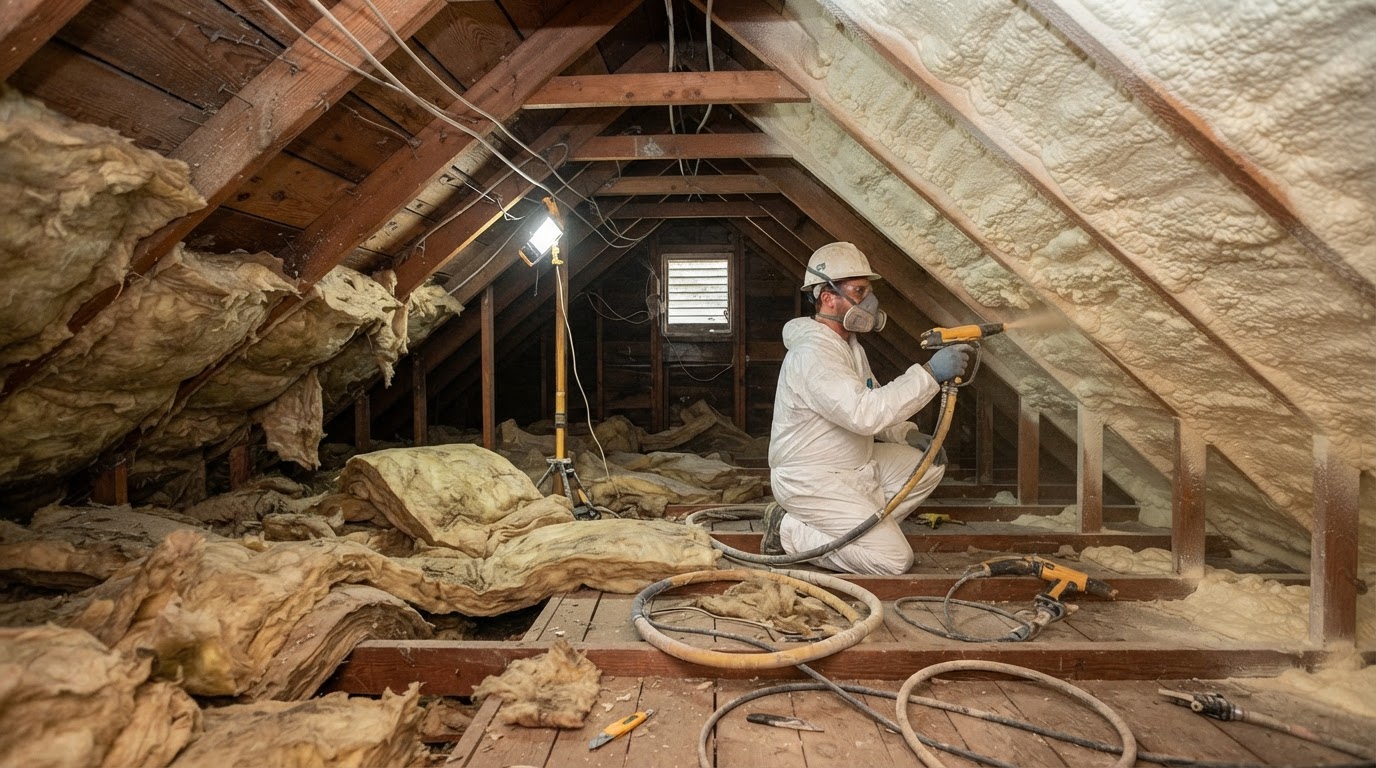
Insulation Removal & Spray Foam Retrofit in San Marcos, TX
Evaluation, Removal of Degraded Insulation & Spray Foam Retrofit for Attics, Remodels & Roofline Conversions
Insulation removal and spray foam retrofit in San Marcos, TX addresses the sequence of evaluating existing insulation—fiberglass, cellulose, or damaged material—before installing spray foam in attics, remodels, accessible wall cavities, and roofline conversions across the San Marcos area and surrounding Central Texas communities. San Marcos Spray Foam Installation evaluates existing insulation condition, removes material where appropriate, and installs open-cell or closed-cell foam as part of the planned assembly. Not all existing insulation must always be removed; the correct approach depends on where the insulation is, the new thermal boundary, the material condition, and the planned spray foam assembly. Request an insulation removal and spray foam retrofit estimate to discuss your project.
Insulation Removal & Spray Foam Retrofit Near San Marcos, TX
Existing homes in the San Marcos area often have older insulation—fiberglass batts, blown-in cellulose, or material that has settled, degraded, or been damaged over time. Before a spray foam retrofit, the existing insulation must be evaluated to determine whether it should remain, be removed, or require specialized assessment. Spray foam is then applied as a liquid that expands and cures in place, filling cavities and gaps to establish a continuous layer of thermal resistance and air sealing as part of the planned assembly.
The defining question is whether existing insulation must be removed. The correct approach depends on where the existing insulation is located, the new thermal boundary, the condition of the material, moisture conditions, and the planned spray foam assembly. An attic floor retrofit may require removing old insulation to access the substrate; a roofline conversion may require removing attic floor insulation because the thermal boundary moves to the roof deck. Not all existing insulation must always be removed.
Material condition drives the decision. Damaged, contaminated, or degraded insulation requires professional evaluation. If suspected mold, asbestos, animal waste, or other contamination is present, specialized assessment and remediation may be required before insulation work. We do not give hazardous-material removal instructions; contaminated material may need specialized handling before any insulation work begins. The planned spray foam assembly—attic floor, roof deck, wall cavity, or remodel—shapes the scope.
Attic Retrofits
Evaluation and removal of old attic insulation before spray foam.
Remodel-Phase Walls
Foam for accessible wall cavities during remodeling.
Roofline Conversions
Removing attic floor insulation when the thermal boundary moves to the roof deck.
Retrofit Performance, Foam Selection & Existing-Insulation Evaluation
Does old attic insulation always have to be removed?
No. Not all existing insulation must always be removed. The correct approach depends on where the existing insulation is located, the new thermal boundary, the condition of the material, moisture conditions, and the planned spray foam assembly. Damaged or contaminated material requires professional evaluation, and suspected mold, asbestos, or animal waste may require specialized remediation first.
Evaluation comes first. The existing insulation is assessed for type, condition, moisture exposure, and contamination. Fiberglass and cellulose behave differently: fiberglass batts may have gaps and settling, while blown-in cellulose may have compacted or absorbed moisture. The condition of the material, the new thermal boundary, and the planned spray foam assembly together determine whether removal is appropriate.
Foam selection follows the planned assembly. Closed-cell foam offers higher thermal resistance per inch in many products, lower vapor permeance, and a rigid cured structure that suits many roof deck, wall, and moisture-prone assemblies. Open-cell foam is lower-density and higher-expansion, useful for interior framed cavities and rooflines where its vapor permeability is acceptable. Exact R-value per inch varies by product, manufacturer, formulation, and installed thickness.
Contamination changes the process. If suspected mold, asbestos, animal waste, or other contamination is present, specialized assessment and remediation may be required before insulation work. We do not give hazardous-material removal instructions; contaminated material may need specialized handling. The retrofit plan accounts for the existing conditions and the planned spray foam assembly as a system.
Evaluation First
Existing insulation assessed for type, condition, and contamination.
Assembly-Driven Removal
Removal decisions follow the new thermal boundary and planned assembly.
Contamination-Aware
Suspected mold, asbestos, or waste may require specialized remediation first.
Insulation Removal & Spray Foam Retrofit Process Near San Marcos
Retrofit projects require evaluation of the existing insulation, the planned assembly, and access. We follow a structured process adapted to retrofit work, with jobsite preparation, ventilation, and product-specific procedures throughout. We do not provide DIY chemical application or hazardous-material removal instructions.
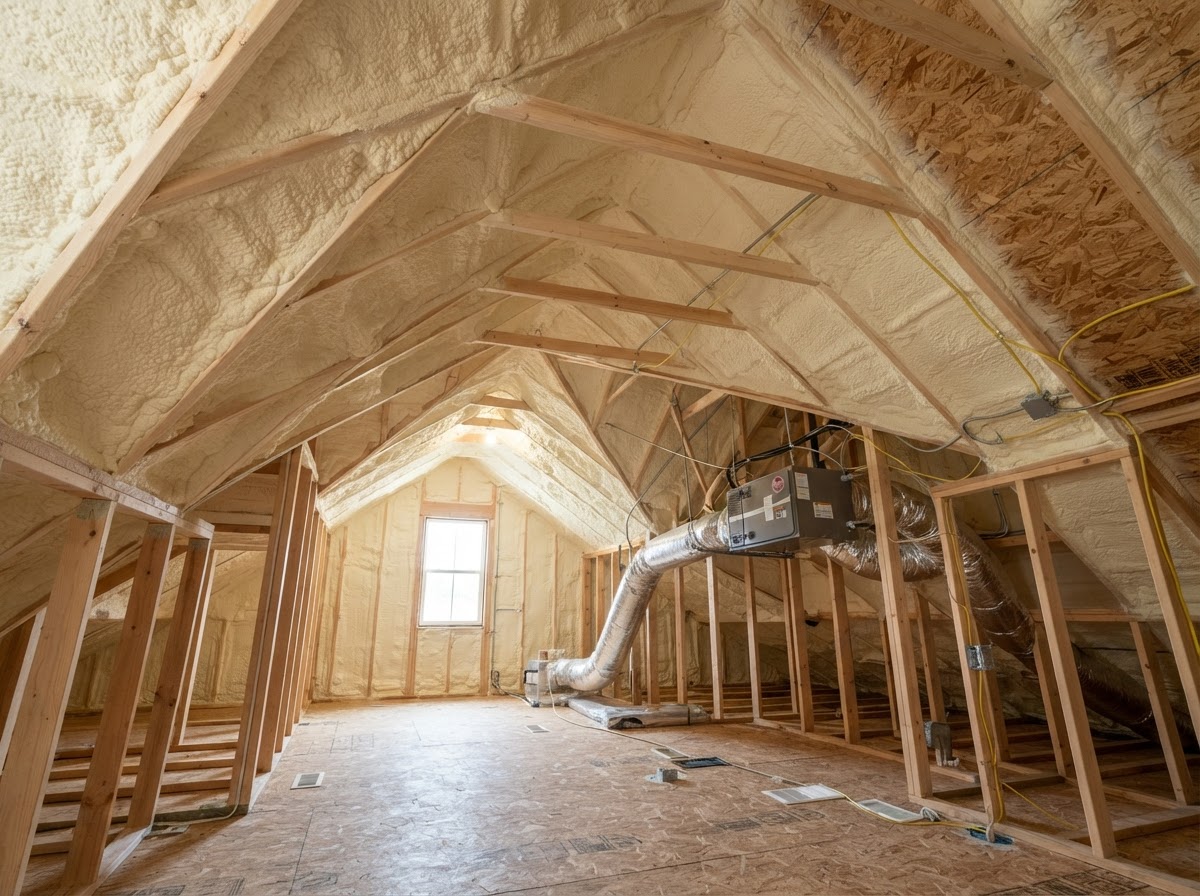
Jobsite preparation, ventilation, protective equipment, curing conditions, and re-entry procedures should follow the specific product requirements and project plan.
- 01
Project Consultation
We review your existing insulation, retrofit goals, and planned assembly to scope the project.
- 02
Existing-Insulation Evaluation
We assess insulation type, condition, moisture, and any contamination concerns.
- 03
Removal & Preparation
Appropriate material is removed; the substrate is prepared for spray foam.
- 04
Foam Application
Open-cell or closed-cell foam is applied per the planned assembly.
- 05
Coverage Review
Applied depth and coverage are verified against the project specification.
- 06
Cleanup & Re-Entry Guidance
We clean the area and provide ventilation and re-entry guidance for the product used.
Insulation Removal & Retrofit Across San Marcos & Central Texas
San Marcos Spray Foam Installation handles insulation removal and spray foam retrofit projects for property owners across San Marcos, Hays County, and the surrounding Central Texas communities. Older homes across the region often have aging fiberglass or cellulose insulation, and Central Texas heat makes attic and roofline retrofits a frequent consideration for owners improving performance.
Whether your retrofit is an attic, remodel-phase wall, or roofline conversion, the right approach depends on the existing insulation, the planned assembly, and access. We help property owners evaluate existing conditions and plan the retrofit. Related retrofit and attic services:
Planning an Insulation Removal & Spray Foam Retrofit in San Marcos, TX?
Talk with San Marcos Spray Foam Installation about your existing insulation, attic, remodel, or roofline conversion. We help you evaluate existing conditions and plan the right retrofit approach for your property.
Insulation Removal & Spray Foam Retrofit FAQs for San Marcos Property Owners
Does old attic insulation always have to be removed?
No. Not all existing insulation must always be removed. The correct approach depends on where the existing insulation is located, the new thermal boundary, the condition of the material, moisture conditions, and the planned spray foam assembly. A roofline conversion, for example, often requires removing attic floor insulation because the thermal boundary moves to the roof deck.
What types of existing insulation can be evaluated for retrofit?
Fiberglass batts, blown-in cellulose, and damaged or degraded insulation can all be evaluated. The condition of the material, moisture exposure, and the planned spray foam assembly together determine whether removal is appropriate. Damaged or contaminated material requires professional evaluation.
What if there is suspected mold, asbestos, or animal waste?
If suspected mold, asbestos, animal waste, or other contamination is present, specialized assessment and remediation may be required before insulation work. We do not give hazardous-material removal instructions; contaminated material may need specialized handling before any insulation work begins.
Can spray foam be installed during a remodel?
Yes. Accessible wall cavities exposed during a remodel can be spray foamed, and attic and roofline retrofits can be coordinated with renovation work. The planned assembly and access shape the approach. We evaluate the existing conditions before recommending a plan.
Open cell or closed cell for a retrofit?
It depends on the planned assembly and moisture strategy. Closed-cell foam is often considered for roof decks, walls, and moisture-prone assemblies because of its density and lower vapor permeance; open-cell foam may suit interior framed cavities and rooflines where its vapor permeability is acceptable. The choice follows the assembly.
How is insulation removal and spray foam retrofit priced?
Cost depends on the existing insulation type and volume, removal requirements, foam type, installed thickness, accessibility, preparation, and overall project scope. Contaminated material or specialized remediation can affect cost. Request a project-specific estimate for accurate pricing.
Planning an Insulation Removal & Spray Foam Retrofit in San Marcos, TX?
Talk with San Marcos Spray Foam Installation about your existing insulation, attic, remodel, or roofline conversion. We help you evaluate existing conditions and plan the right retrofit approach for your property.