
Spray Foam Insulation in San Marcos, TX
Open-Cell & Closed-Cell Foam for Homes, Buildings, Attics, Walls & Metal Structures
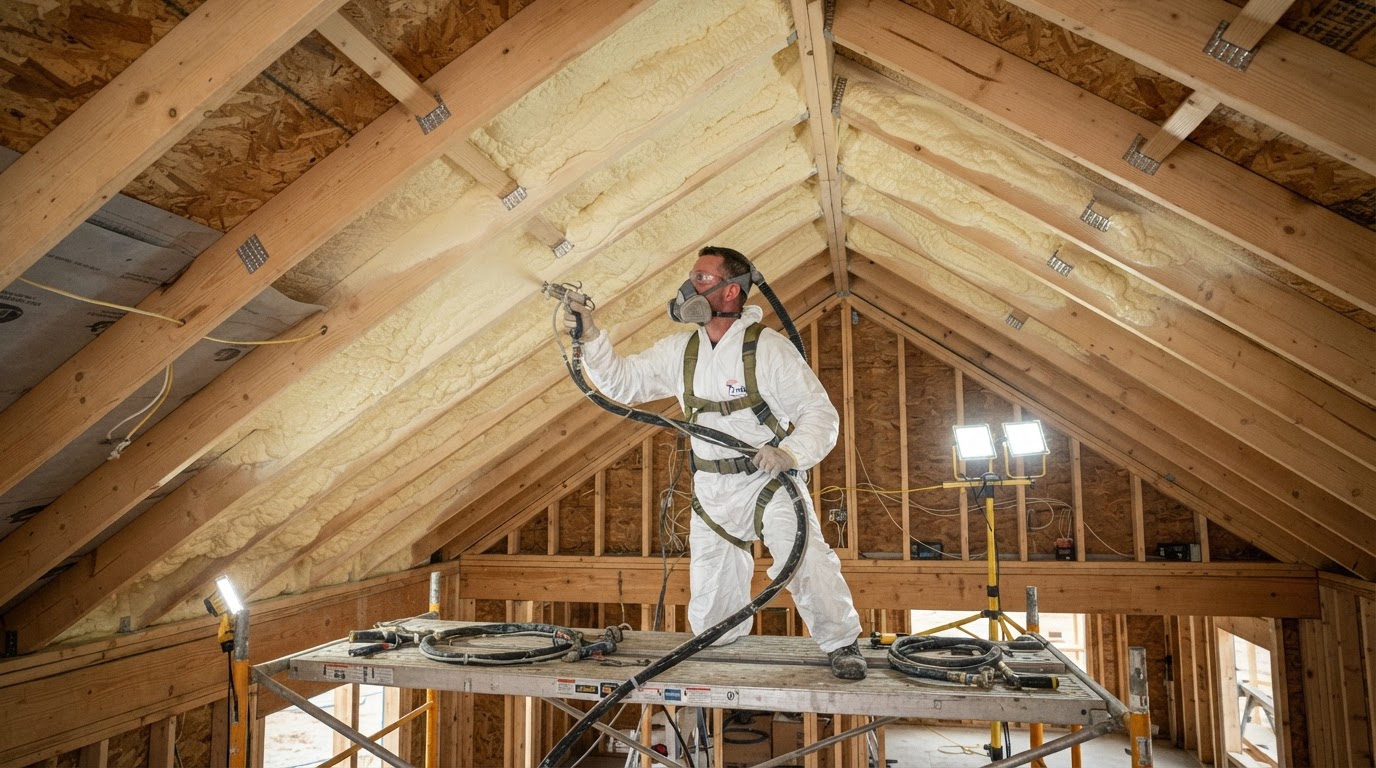
Spray foam insulation in San Marcos, TX is the core service San Marcos Spray Foam Installation provides for property owners across Hays County and the surrounding Central Texas communities. We install both open-cell and closed-cell polyurethane foam in residential attics, framed walls, roof decks, new construction, existing homes, metal buildings, barndominiums, and garages. Whether you are building new or upgrading an existing structure, the right foam type, thickness, and assembly strategy depend on your building design and performance goals. Request a spray foam estimate to discuss your project.
What Spray Foam Insulation Does for San Marcos Properties
Spray foam insulation is a two-component polyurethane system applied as a liquid that expands and cures in place, filling gaps, cavities, and penetrations to establish a continuous layer of thermal resistance and air sealing. Unlike fibrous insulation that sits in a cavity and can leave voids around wires and framing, foam expands to conform to the substrate, which helps reduce uncontrolled air movement through the building envelope.
Property owners in San Marcos consider spray foam for a range of applications. In residential attics, foam at the roof deck can bring the attic inside the conditioned envelope. In framed walls, cavity-fill foam seals draft pathways. On metal buildings, closed-cell foam adheres directly to metal panels and helps manage interior surface temperatures and condensation as part of an appropriate building-envelope strategy. New construction, existing homes, barndominiums, and garages all have suitable applications depending on access and assembly.
The reason someone searches for a spray foam contractor rather than a general insulation installer is the product-specific expertise the work demands. Proper selection between open-cell and closed-cell foam, installed thickness, substrate preparation, jobsite ventilation, and re-entry procedures all affect the finished result. San Marcos Spray Foam Installation scopes each project around the specific assembly, building use, and performance goals.
Open-Cell Foam
Lower-density, high-expansion foam for interior air sealing and sound dampening in suitable assemblies.
Closed-Cell Foam
Denser foam with higher thermal resistance per inch and lower vapor permeance for demanding assemblies.
Whole-Building Envelope
Coordinated applications across attics, walls, roof decks, and metal structures for one property.
Air Sealing, Thermal Envelope & Building Performance
What does spray foam insulation actually do?
Spray foam expands to fill gaps, cavities, and penetrations, establishing a continuous layer of thermal resistance and air sealing across the assembly. This helps reduce uncontrolled air movement through the building envelope, which can support more consistent interior temperatures when correctly selected and installed as part of an appropriate envelope strategy.
Air sealing is the defining characteristic of spray foam. Uncontrolled air movement through gaps, cracks, and penetrations is a primary driver of energy loss and interior discomfort. Foam expands to fill these pathways, which helps reduce the uncontrolled exchange of indoor and outdoor air through the envelope. The degree of benefit depends on the assembly, the existing envelope condition, and the scope of the project.
Thermal envelope continuity matters because insulation performs best when the layer is uninterrupted. Foam conforms to irregular cavities, framing transitions, and penetrations that are difficult to seal with batt insulation alone. When foam is planned as part of the envelope—rather than added piecemeal—the assembly can perform more consistently across the building.
Building performance results vary by project. Spray foam does not guarantee a specific percentage reduction in energy bills, and results depend on the building design, HVAC sizing, existing envelope condition, and how the foam is integrated into the overall strategy. What foam does provide is a continuous, air-sealing insulation layer tailored to the assembly—whether that is an attic roof deck, a framed wall, or a metal building interior.
Air Sealing
Foam expands to fill gaps and reduce uncontrolled air movement through the envelope.
Envelope Continuity
Conforms to framing and penetrations for a more consistent thermal layer.
Assembly-Appropriate
Product and thickness selected for the specific building assembly and use.
How Spray Foam Insulation Is Installed Near San Marcos, TX
Every spray foam project follows a structured process adapted to the building, assembly, and product. We do not provide DIY chemical application instructions; spray foam installation involves professional proportioning equipment, product-specific conditions, ventilation, and re-entry procedures that must be followed.
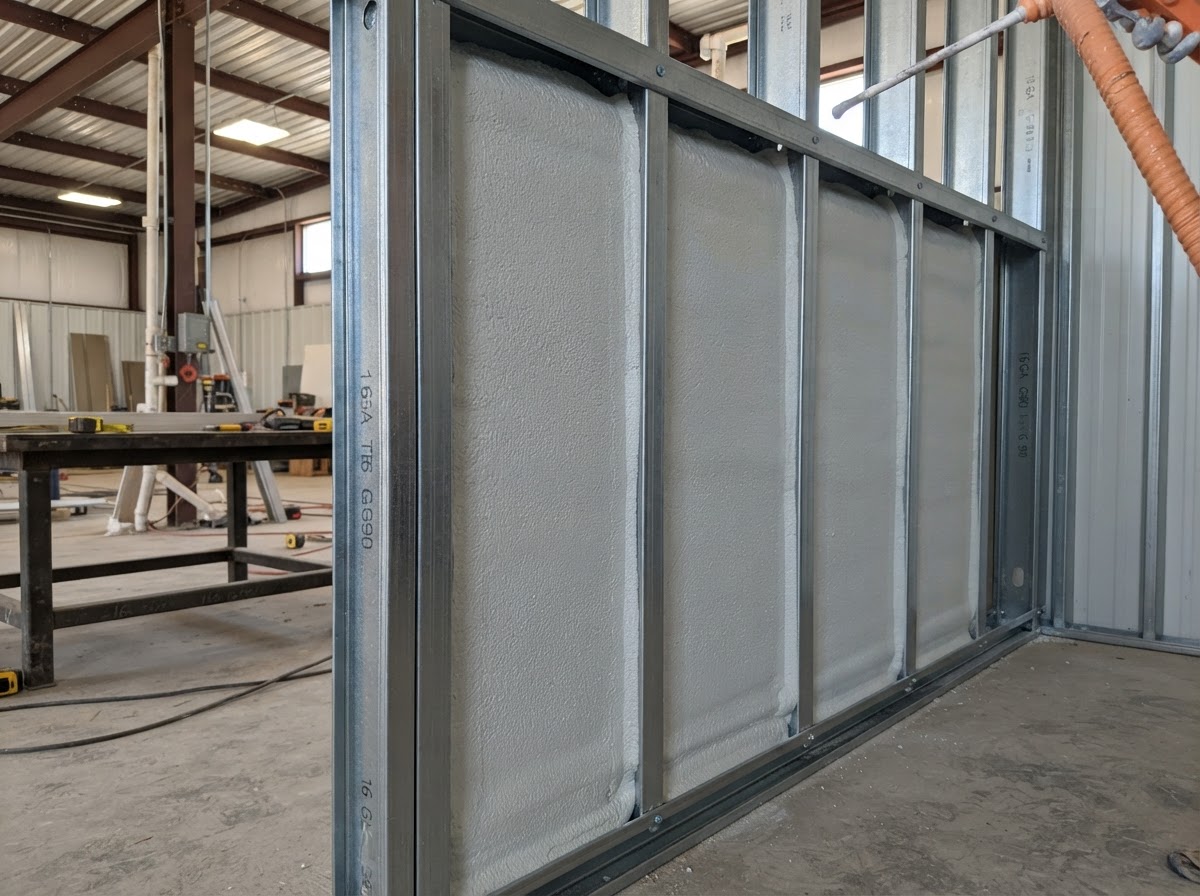
Jobsite preparation, ventilation, protective equipment, curing conditions, and re-entry procedures should follow the specific product requirements and project plan.
- 01
Project Consultation
We review your building type, access, and performance goals to scope the project and recommend foam type.
- 02
Assembly Evaluation
We inspect the substrate, cavity depth, existing insulation, and moisture conditions to plan the application.
- 03
Preparation & Protection
Adjacent surfaces, contents, and mechanical components are masked and protected; jobsite ventilation is set up.
- 04
Spray Foam Application
Open-cell or closed-cell foam is applied using proportioning equipment at the specified thickness and coverage.
- 05
Coverage & Thickness Review
Applied depth and coverage are verified against the project specification and trimmed where finishes follow.
- 06
Cleanup & Re-Entry Guidance
We clean the site and provide ventilation and re-entry guidance specific to the product and job conditions.
Spray Foam Insulation for San Marcos & Central Texas Properties
San Marcos Spray Foam Installation provides spray foam insulation services for residential, commercial, new-construction, attic, metal-building, barndominium, and garage projects in the San Marcos, Texas area. From hot Central Texas summers to seasonal temperature swings across the I-35 corridor and the Texas Hill Country, regional climate conditions make building-envelope performance a frequent priority for property owners throughout Hays County and surrounding Central Texas communities.
The right approach depends on the building design, assembly type, ventilation strategy, moisture conditions, and intended use. We help property owners weigh open-cell versus closed-cell foam, plan coverage across the envelope, and coordinate new-construction scheduling when applicable. Every recommendation is project-specific rather than a one-size prescription.
Related services:
Need Spray Foam Insulation in San Marcos, TX?
Talk with San Marcos Spray Foam Installation about your home, building, attic, metal structure, or construction project. We help you select the right foam type and plan the right scope for your property.
Spray Foam Insulation FAQs for San Marcos, TX Property Owners
What is spray foam insulation?
Spray foam insulation is a two-component polyurethane system applied as a liquid that expands and cures in place, filling gaps and cavities to establish a continuous layer of thermal resistance and air sealing. It is available in open-cell and closed-cell formulations, each with different physical properties suited to different building assemblies.
What areas of a building can be insulated with spray foam?
Common application areas include attics and roof decks, framed exterior and interior walls, rim joists, crawl spaces, garage walls and ceilings, and the interior of metal buildings. The suitable areas for a given project depend on the building design, access, assembly type, and whether the space is new construction or existing.
Should I choose open cell or closed cell spray foam?
It depends on the assembly, intended use, moisture strategy, available cavity depth, and performance goals. Open-cell foam is lower-density and higher-expansion; closed-cell is denser with higher thermal resistance per inch and lower vapor permeance. We recommend a type based on your specific building and project.
Can existing homes receive spray foam insulation?
Yes, when the assembly is accessible. The most common existing-home application is the attic roofline, where foam can bring the attic inside the conditioned envelope. Wall cavities can be foamed during remodels when drywall is removed. Fully enclosed finished walls generally require opening before foam can be applied.
How is the cost of spray foam insulation determined?
Cost depends on the size of the application area, foam type, installed thickness, accessibility, preparation needs, substrate conditions, and overall project scope. Because these factors vary by project, we provide project-specific estimates rather than a fixed per-square-foot price.
How long does spray foam installation take?
Timeline varies by building size, scope, accessibility, preparation, foam type, and jobsite conditions. A single attic may take a day while a whole-building envelope project may span several days. We provide a schedule estimate with your project quote.
How do I request a spray foam estimate in San Marcos?
Call 512-967-8730 or submit the estimate request form on this page. Provide your project city, property type, and the service you are considering, and we will follow up to discuss scope, foam selection, and scheduling.
Need Spray Foam Insulation in San Marcos, TX?
Talk with San Marcos Spray Foam Installation about your home, building, attic, metal structure, or construction project. We help you select the right foam type and plan the right scope for your property.