
Metal Building Condensation Control Spray Foam in San Marcos, TX
Closed-Cell Foam Strategy for Metal Roofs, Steel Buildings & Interior Surface Temperature Management
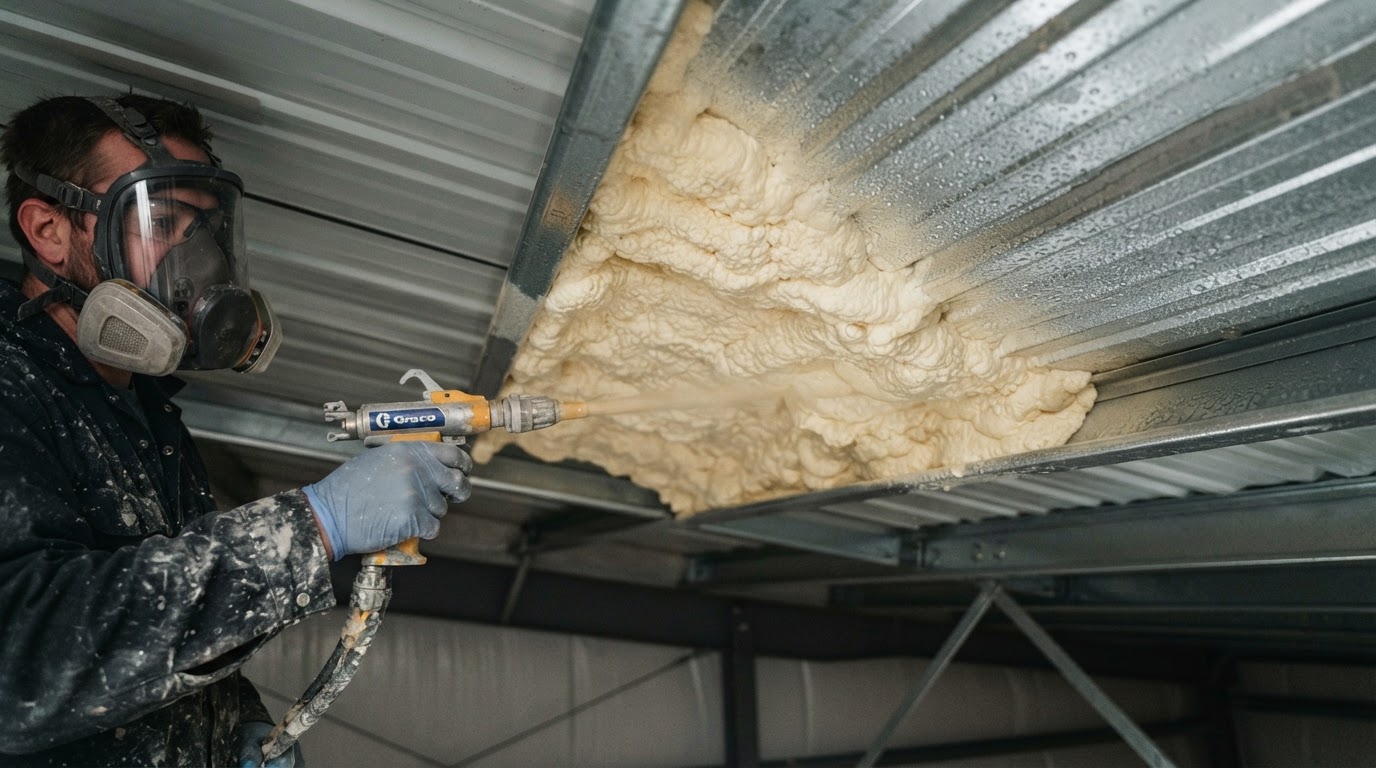
Metal building condensation control spray foam in San Marcos, TX addresses the sweating, dripping, and interior moisture that occur when warm humid air meets cooler metal surfaces in shops, warehouses, and steel buildings across the San Marcos area and surrounding Central Texas communities. San Marcos Spray Foam Installation installs closed-cell polyurethane foam directly to metal roof and wall panels to help manage interior surface temperatures and reduce the air movement that carries moisture to the metal. Closed-cell foam can be part of a condensation-control strategy, but it does not guarantee no condensation; successful moisture control depends on the whole building. Request a metal building condensation control estimate to discuss your structure.
Condensation Control for Metal Buildings Near San Marcos, TX
Condensation in a metal building happens when warm, humid air meets a cooler metal surface. The metal roof and walls radiate heat outward at night and heat up rapidly during the day, so interior surface temperatures swing widely. When humid air contacts a surface below the dew point, moisture condenses on the metal and can drip onto equipment, stored goods, and framing. This is a common issue across Central Texas, where humidity is high and metal buildings are widespread.
Closed-cell spray foam, applied directly to the interior surface of the metal panels, helps manage condensation in two ways. First, it thermally separates the interior air from the metal, raising the interior surface temperature above the dew point in many conditions. Second, it reduces the uncontrolled air movement that carries humid air to the metal. Together these effects can be part of an effective condensation-control strategy when the foam is properly selected and installed.
The building's use and ventilation shape the outcome. A shop with frequent door opening, a warehouse with operational humidity sources, and a storage building with no ventilation all present different moisture conditions. Closed-cell foam does not guarantee no condensation under every condition; the whole building's ventilation, use, and humidity sources must be part of the moisture-management plan. We evaluate the structure before recommending an approach.
Metal Roofs
Closed-cell foam applied to metal roof panels to manage surface temperatures.
Steel Buildings
Foam for steel building walls and roofs as part of a moisture strategy.
Interior Surface Management
Foam helps raise interior surface temperatures above the dew point.
How Closed-Cell Foam Supports Condensation Control
Can spray foam completely eliminate metal-building condensation?
No. Closed-cell spray foam can be part of a condensation-control strategy by reducing air movement and changing interior surface temperatures when properly selected and installed, but it does not guarantee no condensation. Successful moisture control depends on the whole building, including ventilation, use, and humidity sources.
The mechanism is thermal separation and air sealing. Closed-cell foam applied directly to metal creates a layer that separates interior air from the metal, raising the interior surface temperature above the dew point in many conditions. It also reduces the uncontrolled air movement that carries humid air to the metal. These effects help manage condensation as part of an appropriate building-envelope and moisture-management strategy.
Closed-cell foam is the product most often considered for this application because of its adhesion to metal, density, and lower vapor permeance compared with open-cell foam. Its rigid cured structure suits metal roof and wall panels. Exact R-value per inch varies by product, manufacturer, formulation, and installed thickness. Open-cell foam is generally not the first choice for direct-to-metal condensation control because of its higher vapor permeance.
The whole building matters. Ventilation, building use, humidity sources, and operational conditions all affect whether condensation occurs. A sealed metal building with internal humidity sources and no ventilation can still develop moisture problems even with foam installed. We do not claim spray foam prevents all condensation; we help property owners plan a moisture strategy that includes foam where appropriate, alongside ventilation and use considerations.
Thermal Separation
Foam separates interior air from metal to raise surface temperature.
Air-Movement Reduction
Foam reduces humid air reaching the metal surface.
Whole-Building Strategy
Foam paired with ventilation and use planning for moisture control.
Condensation Control Spray Foam Installation Process Near San Marcos
Condensation control projects require evaluation of the metal building, use, and moisture conditions. We follow a structured process adapted to metal assemblies, with jobsite preparation, ventilation, and product-specific procedures throughout. We do not provide DIY chemical application instructions.
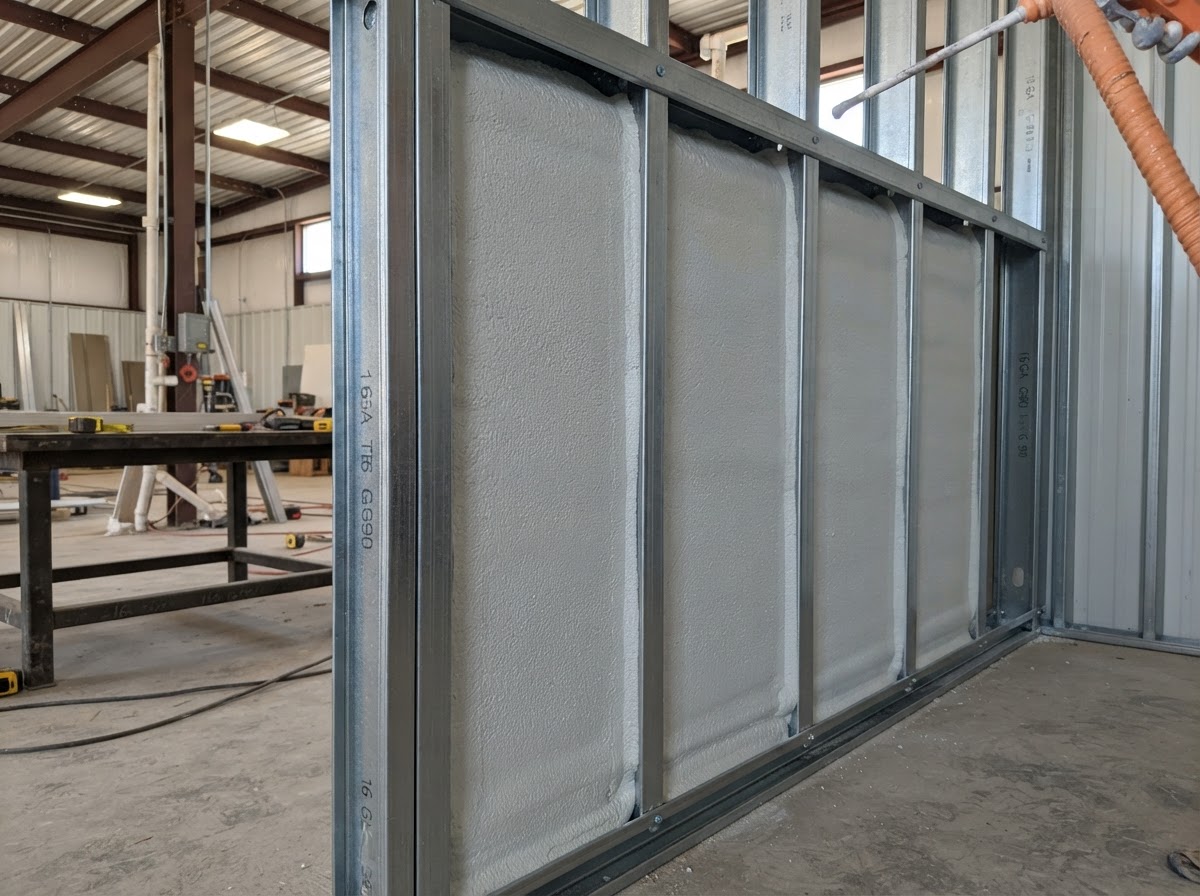
Jobsite preparation, ventilation, protective equipment, curing conditions, and re-entry procedures should follow the specific product requirements and project plan.
- 01
Building Consultation
We review your metal building, use, and condensation concerns to scope the project.
- 02
Moisture & Substrate Review
We inspect the metal panels, moisture conditions, ventilation, and humidity sources.
- 03
Preparation & Protection
Contents, equipment, and adjacent surfaces are protected.
- 04
Closed-Cell Application
Closed-cell foam is applied directly to metal roof and wall panels per the plan.
- 05
Coverage Review
Applied depth and continuity are verified across the metal surfaces.
- 06
Cleanup & Re-Entry Guidance
We clean the building and provide ventilation and re-entry guidance for the product used.
Metal Building Condensation Control Across San Marcos & Central Texas
San Marcos Spray Foam Installation installs condensation-control spray foam for metal buildings across San Marcos, Hays County, and the surrounding Central Texas communities. Metal shops, warehouses, and steel buildings are common across the region, and Central Texas humidity makes metal-building condensation a frequent concern for owners protecting equipment and interiors.
Whether your metal building is a shop, warehouse, or storage structure, the right approach depends on the construction, use, and moisture conditions. We help property owners plan a condensation-control strategy that includes closed-cell foam where appropriate, alongside ventilation and use considerations. Related metal-building and commercial services:
Managing Condensation in a Metal Building in San Marcos, TX?
Talk with San Marcos Spray Foam Installation about condensation in your metal shop, warehouse, or steel building. We help you plan a condensation-control strategy that includes closed-cell foam where appropriate, alongside ventilation and use considerations.
Metal Building Condensation Control FAQs for San Marcos Property Owners
Can spray foam completely eliminate metal-building condensation?
No. Closed-cell spray foam can be part of a condensation-control strategy by reducing air movement and changing interior surface temperatures when properly selected and installed, but it does not guarantee no condensation. Successful moisture control depends on the whole building, including ventilation, use, and humidity sources.
How does closed-cell foam help with metal-building condensation?
Closed-cell foam applied directly to metal thermally separates the interior air from the metal, raising the interior surface temperature above the dew point in many conditions, and reduces the uncontrolled air movement that carries humid air to the metal. These effects help manage condensation as part of an appropriate building-envelope and moisture-management strategy.
Why do metal buildings sweat?
Metal surfaces sweat when warm, humid air meets a cooler metal surface below the dew point. Metal roofs and walls radiate heat outward at night and heat up rapidly during the day, so interior surface temperatures swing widely. When humid air contacts a surface below the dew point, moisture condenses on the metal.
Open cell or closed cell for condensation control?
Closed-cell foam is the product most often considered for direct-to-metal condensation control because of its adhesion to metal, density, and lower vapor permeance. Open-cell foam is generally not the first choice for this application because of its higher vapor permeance. Selection remains project-specific.
Does ventilation still matter after foam is installed?
Yes. Ventilation, building use, and humidity sources all affect whether condensation occurs. A sealed metal building with internal humidity sources and no ventilation can still develop moisture problems even with foam installed. Foam is part of a moisture strategy, not a replacement for ventilation planning.
How is condensation control spray foam priced?
Cost depends on the total surface area, foam type, installed thickness, accessibility, height, substrate preparation, and overall project scope. Larger metal buildings and buildings with significant humidity sources may require different approaches that affect cost. Request a project-specific estimate for accurate pricing.
Managing Condensation in a Metal Building in San Marcos, TX?
Talk with San Marcos Spray Foam Installation about condensation in your metal shop, warehouse, or steel building. We help you plan a condensation-control strategy that includes closed-cell foam where appropriate, alongside ventilation and use considerations.