
RV Garage & Boat Storage Spray Foam Insulation in San Marcos, TX
Spray Foam for Tall RV Garages, Motorhome Storage, Boat Storage & Metal RV Buildings
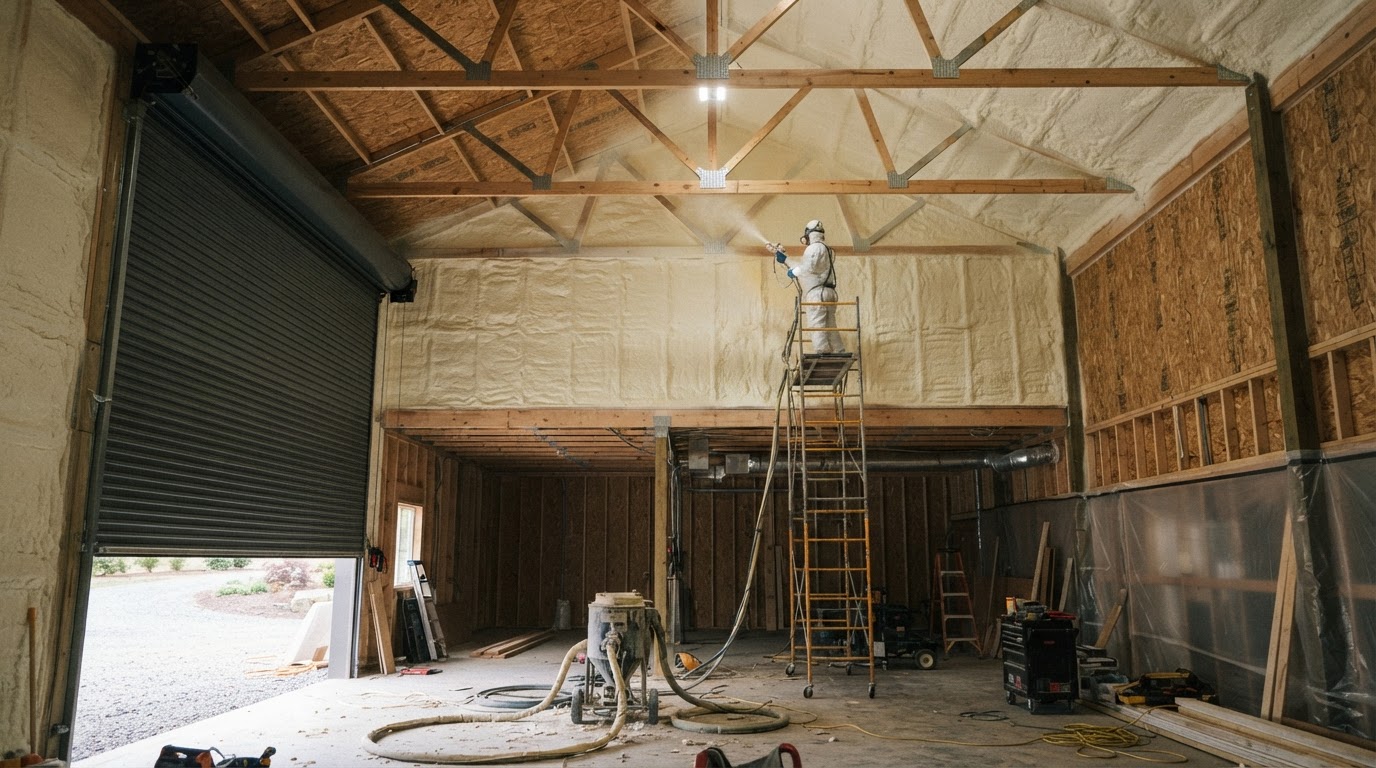
RV garage and boat storage spray foam insulation in San Marcos, TX addresses the tall walls, large roof areas, and oversized overhead doors that define RV garages, motorhome storage, and boat storage structures across the San Marcos area and surrounding Central Texas communities. San Marcos Spray Foam Installation installs open-cell and closed-cell polyurethane foam for RV garage walls, roof decks, and ceilings. Because large doors and frequent opening affect building performance, the insulation strategy depends on whether the space is conditioned, semi-conditioned, or unconditioned, and on the structure's construction. Request an RV garage spray foam estimate to discuss your building.
Spray Foam for RV Garages and Boat Storage Near San Marcos, TX
RV garages and boat storage buildings in the San Marcos area are defined by scale: tall walls to clear a motorhome or boat, deep bays, large roof areas, and oversized overhead doors. Spray foam is applied as a liquid that expands and cures in place, filling cavities, gaps, and penetrations to establish a continuous layer of thermal resistance and air sealing across these large assemblies.
The defining insulation challenge of an RV garage is the large overhead door. A tall door represents a major air-leakage path when closed and a wide-open envelope breach when raised. Foam helps seal the surrounding framing and reduces uncontrolled air movement through the walls and roof, but frequent door opening will always affect interior conditions. The building's conditioning strategy—conditioned, semi-conditioned, or unconditioned—shapes the target performance.
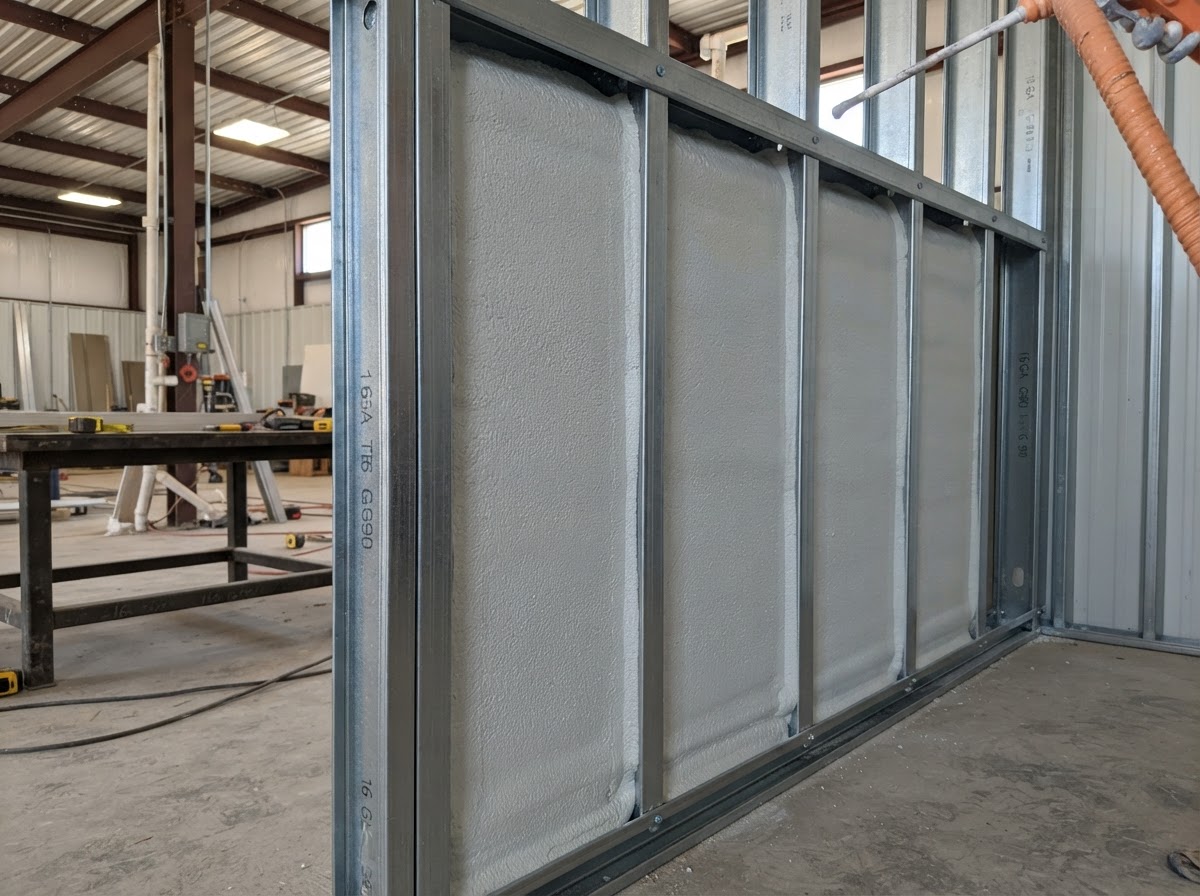
Construction type guides the recommendation. Metal RV buildings often point toward closed-cell foam for adhesion to metal panels, density, and lower vapor permeance. Wood-framed RV garages with open interior walls and rooflines may suit open-cell foam for high-expansion air sealing. The building's use—motorhome storage, boat storage, or a combined workshop and RV bay—shapes the scope and priorities.
Tall RV Garages
Foam for tall walls and roof decks in motorhome and RV garages.
Boat Storage
Insulation for boat storage structures and detached storage buildings.
Metal RV Buildings
Closed-cell foam for metal RV garage walls and roof panels.
RV Garage Performance, Foam Selection & Door Considerations
Is spray foam good for an RV garage?
Yes. Spray foam can be a strong insulation and air-sealing choice for many San Marcos-area RV garages and boat storage buildings when the foam type matches the structure's construction and use. Closed-cell foam is frequently considered for metal RV buildings, while open-cell foam may suit wood-framed walls and rooflines.
Air sealing is a primary benefit for RV garages. Foam expands to fill gaps around tall framing, penetrations, and metal profiles, helping reduce uncontrolled air movement through the walls and roof. A tighter envelope helps the garage hold conditioned or semi-conditioned air more effectively when mechanical conditioning is present, though large door opening will always affect interior conditions.
Foam selection follows the construction. Closed-cell foam is frequently considered for metal RV buildings because it adheres directly to metal panels, offers higher thermal resistance per inch in many products, and has lower vapor permeance than open-cell foam. Open-cell foam is lower-density and higher-expansion, useful for filling irregular wood-framed cavities where its vapor permeability is acceptable. Exact R-value per inch varies by product, manufacturer, formulation, and installed thickness.
Condensation strategy matters for metal RV buildings. Metal surfaces sweat when warm humid air meets a cool substrate, and condensation can affect stored vehicles and boats. Closed-cell foam helps manage interior surface temperatures and condensation as part of an appropriate building-envelope and moisture-management strategy, but it does not prevent all condensation under every condition.
Air Sealing
Foam fills tall framing and gaps to reduce uncontrolled air movement.
Door-Aware Strategy
Coverage planned around large overhead doors and frequent opening.
Metal-Building Strategy
Closed-cell foam helps manage heat and condensation on metal panels.
RV Garage Spray Foam Installation Process Near San Marcos
RV garage and boat storage projects require evaluation of the structure, use, and access. We follow a structured process adapted to tall garage assemblies, with jobsite preparation, ventilation, and product-specific procedures throughout. We do not provide DIY chemical application instructions.
Jobsite preparation, ventilation, protective equipment, curing conditions, and re-entry procedures should follow the specific product requirements and project plan.
- 01
Garage Consultation
We review your RV garage or boat storage type, use, and goals to scope the project.
- 02
Construction Evaluation
We inspect the framing or metal structure, tall walls, roof, and access.
- 03
Preparation & Protection
Stored vehicles, boats, and adjacent surfaces are protected.
- 04
Foam Application
Open-cell or closed-cell foam is applied to walls, roof deck, or ceiling.
- 05
Coverage & Trim
Applied depth is verified; foam is trimmed flush where finishes follow.
- 06
Cleanup & Re-Entry Guidance
We clean the garage and provide ventilation and re-entry guidance for the product used.
RV Garage Insulation Across San Marcos & Central Texas
San Marcos Spray Foam Installation insulates RV garages and boat storage buildings for property owners across San Marcos, Hays County, and the surrounding Central Texas communities. Tall RV garages, motorhome storage, and boat storage structures are common across the region, and Central Texas heat makes RV garage insulation a frequent upgrade for owners protecting vehicles and creating usable space.
Whether your RV garage is metal or wood-framed, conditioned or unconditioned, the right approach depends on the construction, use, and moisture conditions. We help property owners plan the envelope and select the appropriate foam type. Related garage and storage services:
Insulating an RV Garage or Boat Storage Building in San Marcos, TX?
Talk with San Marcos Spray Foam Installation about your RV garage, motorhome storage, or boat storage building. We help you plan the right envelope and foam selection for your tall structure and how you use it.
RV Garage & Boat Storage Spray Foam FAQs for San Marcos Property Owners
Is spray foam good for an RV garage?
Yes. Spray foam can be a strong insulation and air-sealing choice for many San Marcos-area RV garages when the foam type matches the structure's construction and use. Closed-cell foam is frequently considered for metal RV buildings, while open-cell foam may suit wood-framed walls and rooflines.
How do large overhead doors affect RV garage insulation?
Large overhead doors are a major air-leakage path when closed and a wide-open envelope breach when raised. Foam helps seal the surrounding framing and reduces uncontrolled air movement through walls and roof, but frequent door opening will always affect interior conditions. The conditioning strategy should account for door use.
Can an existing RV garage be spray foamed?
Yes, when the wall, ceiling, or roof surfaces are accessible and appropriate for the planned assembly. Existing metal and wood-framed RV garages can often be insulated from the interior. We evaluate access and construction before recommending an approach.
Open cell or closed cell for an RV garage?
Both are used. Closed-cell foam is often considered for metal RV buildings because of its adhesion, density, and lower vapor permeance; open-cell foam may suit interior wood-framed walls and rooflines. The choice depends on the construction, use, and moisture conditions.
Can spray foam help manage condensation in a metal RV garage?
Closed-cell foam can be part of a condensation-control strategy by reducing air movement and changing interior surface temperatures when properly selected and installed. It does not prevent all condensation under every condition; ventilation, use, and humidity sources all factor in.
How much does RV garage spray foam cost?
Cost depends on the garage size, wall height, foam type, installed thickness, accessibility, preparation, and overall project scope. Tall RV garages and conditioned spaces may require different approaches that affect cost. Request a project-specific estimate for accurate pricing.
Insulating an RV Garage or Boat Storage Building in San Marcos, TX?
Talk with San Marcos Spray Foam Installation about your RV garage, motorhome storage, or boat storage building. We help you plan the right envelope and foam selection for your tall structure and how you use it.