
Wall Spray Foam Insulation in San Marcos, TX
Cavity Fill for Framed Exterior Walls, New Construction, Remodels & Penetration Sealing
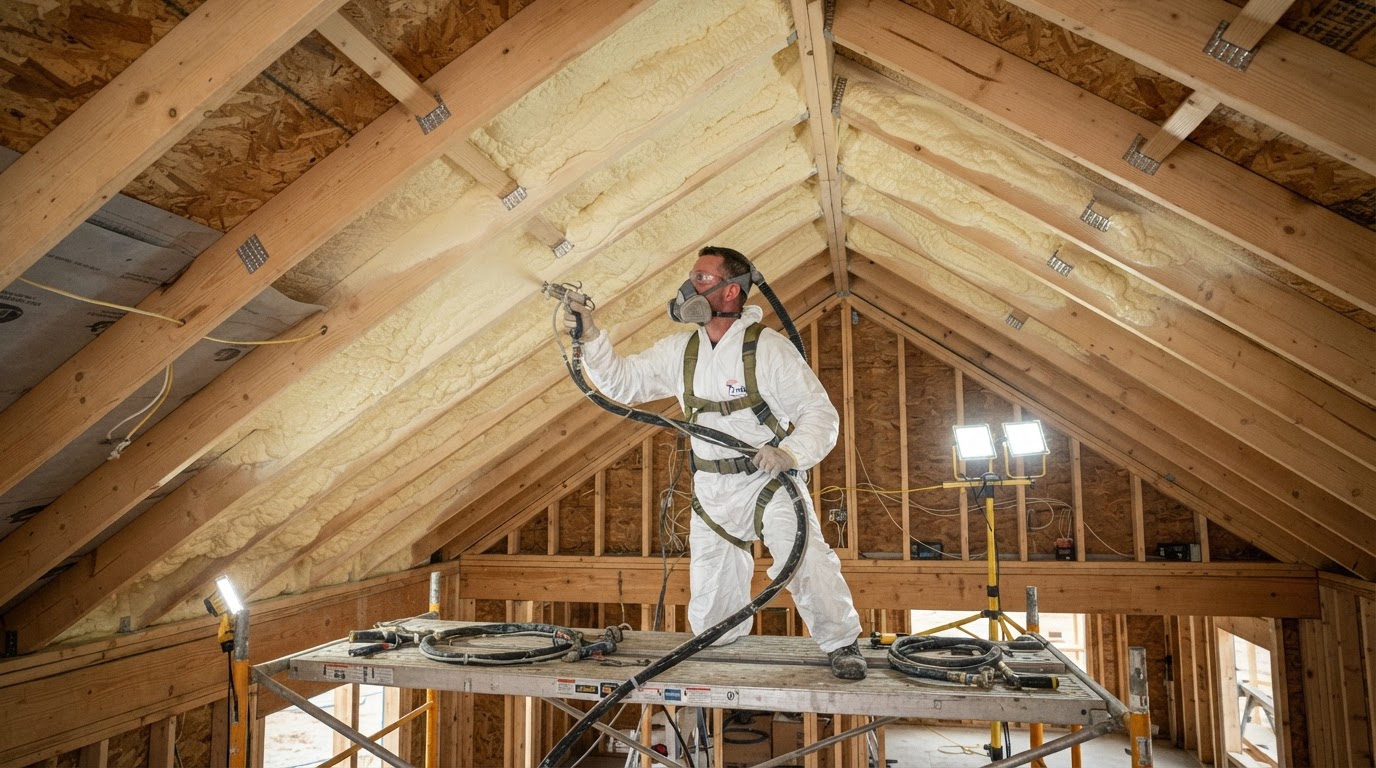
Wall spray foam insulation in San Marcos, TX fills framed exterior and interior wall cavities with open-cell or closed-cell polyurethane foam to seal draft pathways, fill irregular framing, and establish a continuous thermal layer. San Marcos Spray Foam Installation installs wall foam in new construction, remodels, and accessible wall cavities throughout the San Marcos area and surrounding Central Texas communities. Fully enclosed finished walls generally require opening before foam can be applied, so access is a key consideration. Request a wall spray foam estimate to discuss your assembly and access.
Wall Spray Foam Near San Marcos for Framed Wall Cavities
Wall cavities are a primary pathway for uncontrolled air movement and thermal loss. Spray foam fills the cavity, conforms to framing and penetrations, and seals gaps around wiring, outlets, and transitions that are difficult to address with batt insulation. In framed exterior walls, this helps reduce draft pathways and supports a more consistent thermal layer across the wall assembly.
Where wall foam is commonly used: new construction framing with studs exposed, remodels with drywall removed, and accessible interior or exterior wall cavities. Open-cell foam is common for interior framed walls; closed-cell foam may be considered for exterior wall assemblies where density or vapor characteristics are relevant. The right product depends on the wall assembly, moisture strategy, and available cavity depth.
Why property owners search for wall spray foam specifically: new construction planning the envelope before drywall, remodels opening walls for renovation, or homes with persistent drafts traced to wall cavities. A key consideration is access—standard spray foam application requires access to the cavity, and fully enclosed finished walls generally require opening before foam can be applied.
New Construction Walls
Cavity fill in framed exterior walls before drywall is installed.
Remodel-Phase Walls
Foam when drywall is removed during renovation projects.
Penetration Sealing
Filling gaps around wiring, outlets, and framing transitions.
Wall Cavity Performance, Air Sealing & Access Considerations
Can spray foam be installed in exterior walls?
Yes, when the wall cavity is accessible. Spray foam fills framed exterior wall cavities, conforms to framing and penetrations, and seals gaps that are difficult to address with batt insulation. New construction with studs exposed and remodels with drywall removed offer the best access. Fully enclosed finished walls generally require opening before foam can be applied.
Air sealing around penetrations is a primary wall benefit. Wall cavities contain wiring, outlet boxes, and framing transitions that create gaps for uncontrolled air movement. Foam expands to fill these, which helps reduce draft pathways through the wall assembly when installed as part of an appropriate envelope strategy.
Framing transitions and irregular cavities are well-suited to foam. Unlike batt insulation, which can leave voids around irregular framing, foam conforms to the cavity shape and fills irregular spaces. This supports a more continuous thermal layer across the wall, though performance depends on the assembly, cavity depth, and the existing envelope condition.
Retrofit limitations matter for existing homes. Fully enclosed finished walls generally cannot simply be spray-foamed without access; standard spray foam application requires access to the cavity. During a remodel with drywall removed, wall cavities become accessible and foam becomes a strong option. We are clear about what is feasible for your wall assembly and do not imply that closed walls can be foamed without access.
Penetration Air Sealing
Foam fills gaps around wiring, outlets, and framing transitions.
Cavity Conformance
Conforms to irregular framing for a more continuous thermal layer.
Access Requirements
Standard application requires cavity access; enclosed walls need opening.
Wall Spray Foam Installation Process
Wall foam projects require evaluation of the wall assembly, access, and existing conditions. We follow a structured process adapted to wall cavities, with jobsite preparation, ventilation, and product-specific procedures throughout.
Jobsite preparation, ventilation, protective equipment, curing conditions, and re-entry procedures should follow the specific product requirements and project plan.
- 01
Wall Assembly Consultation
We review your wall type, access, and goals to scope the wall foam project.
- 02
Cavity & Access Evaluation
We inspect cavity depth, framing, existing conditions, and moisture strategy to plan the application.
- 03
Preparation & Protection
Adjacent surfaces, wiring, and mechanical components are masked; jobsite ventilation is established.
- 04
Wall Cavity Application
Open-cell or closed-cell foam is applied to the wall cavity at the specified thickness and coverage.
- 05
Coverage & Trim
Applied depth is verified; foam is trimmed flush to the stud face where drywall will follow.
- 06
Cleanup & Re-Entry Guidance
We clean the site and provide ventilation and re-entry guidance specific to the product used.
Wall Insulation Across San Marcos & Central Texas
San Marcos Spray Foam Installation installs wall foam for builders and homeowners across San Marcos, Hays County, and the surrounding Central Texas communities. Regional new construction growth and remodeling activity along the I-35 corridor make wall cavity insulation a frequent project type.
Whether you are insulating new construction walls, remodeling an existing home, or addressing drafts in accessible cavities, the right approach depends on the wall assembly, access, and moisture strategy. We help property owners understand what is feasible and plan the wall scope accordingly.
Related wall and assembly services:
Wall Spray Foam for Your San Marcos Property?
Talk with San Marcos Spray Foam Installation about your new construction walls, remodel, or accessible wall cavities. We help you plan the right scope and foam type for your assembly.
Wall Spray Foam FAQs for San Marcos Property Owners
Can spray foam be installed in exterior walls?
Yes, when the wall cavity is accessible. Spray foam fills framed exterior wall cavities, conforms to framing and penetrations, and seals gaps that are difficult to address with batt insulation. New construction with studs exposed and remodels with drywall removed offer the best access.
Can finished walls be spray foamed?
Fully enclosed finished walls generally cannot simply be spray-foamed without access. Standard spray foam application requires access to the cavity, so finished walls typically require opening during a remodel. We are clear about what is feasible for your wall assembly.
Open cell or closed cell for walls?
Both are used. Open-cell foam is common for interior framed walls and where vapor permeability is acceptable; closed-cell foam may be considered for exterior wall assemblies where density or vapor characteristics are relevant. The choice depends on the wall assembly and moisture strategy.
Is spray foam useful in new construction walls?
Yes. New construction offers full access to framed wall cavities before drywall, making it an ideal time for wall foam. Cavity fill seals penetrations and framing transitions and supports a more continuous thermal layer across the wall assembly.
How is wall coverage determined?
Coverage is determined by the wall area, cavity depth, foam type, and installed thickness. We measure the wall area and scope the product and thickness based on the assembly and performance goals. Request a project-specific estimate for accurate wall coverage and pricing.
Does spray foam seal around penetrations in walls?
Yes. Foam expands to fill gaps around wiring, outlet boxes, and framing transitions, which helps reduce uncontrolled air movement through the wall assembly. This penetration sealing is a primary benefit of wall foam compared with batt insulation.
Wall Spray Foam for Your San Marcos Property?
Talk with San Marcos Spray Foam Installation about your new construction walls, remodel, or accessible wall cavities. We help you plan the right scope and foam type for your assembly.