
Tiny Home & ADU Spray Foam Insulation in San Marcos, TX
Spray Foam for Tiny Houses, Accessory Dwelling Units, Guest Houses & Backyard Living Structures
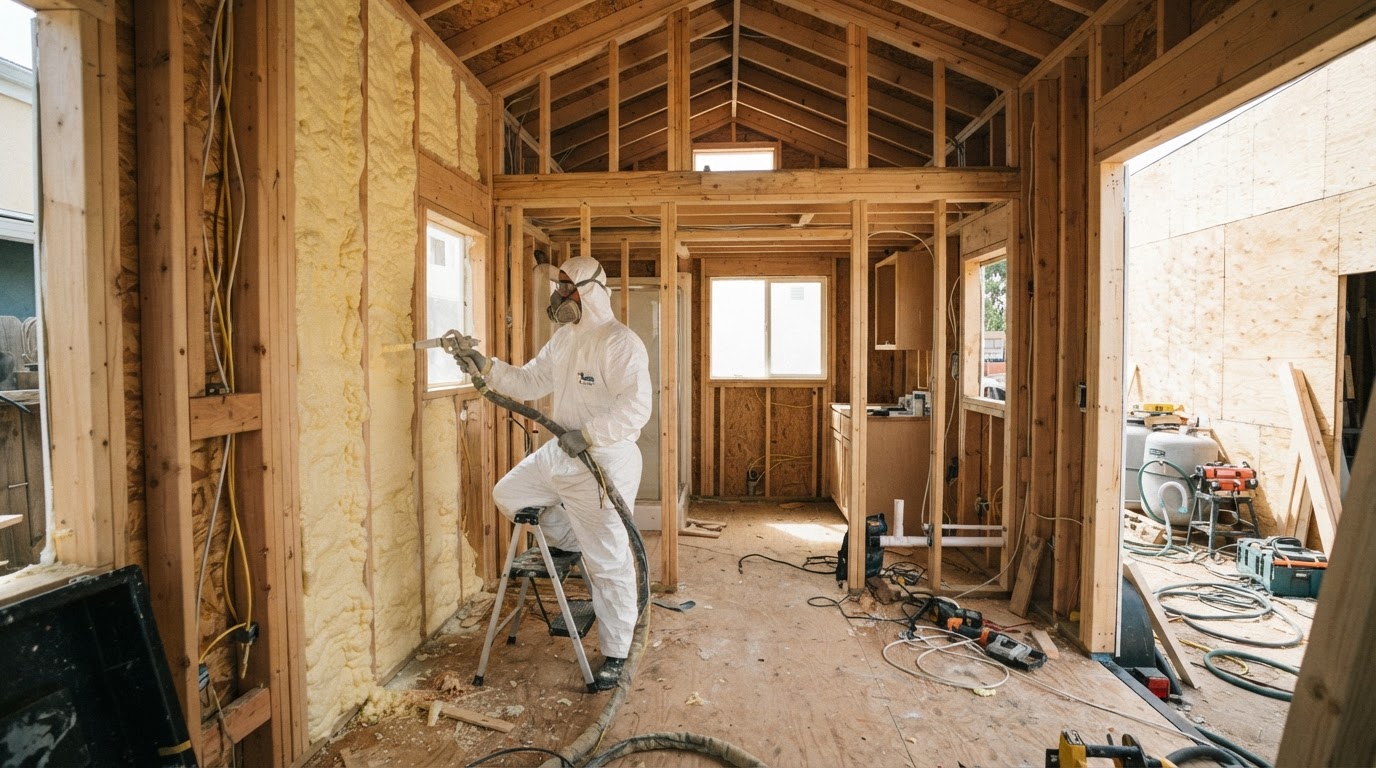
Tiny home and ADU spray foam insulation in San Marcos, TX addresses the compact wall cavities, roof assemblies, and conditioned-envelope needs of tiny houses, accessory dwelling units, guest houses, and backyard structures converted to living space across the San Marcos area and surrounding Central Texas communities. San Marcos Spray Foam Installation installs open-cell and closed-cell polyurethane foam for tiny home walls and roofs, with attention to space efficiency and the conditioned envelope. The right foam type and approach depend on the construction, cavity depth, and whether the structure is new construction or a renovation. Request a tiny home spray foam estimate to discuss your project.
Spray Foam for Tiny Homes and ADUs Near San Marcos, TX
Tiny homes and accessory dwelling units in the San Marcos area are defined by compact size: shallow wall cavities, limited roof assembly depth, and a small conditioned volume. Spray foam is applied as a liquid that expands and cures in place, filling cavities, gaps, and penetrations to establish a continuous layer of thermal resistance and air sealing. In a small structure, a tight, continuous envelope has an outsized effect on comfort and conditioning load.
The defining characteristic of tiny home insulation is space efficiency. Shallow wall cavities and limited roof depth mean foam selection and thickness must balance performance against available space. Closed-cell foam, with its higher thermal resistance per inch in many products, is often considered where cavity depth is limited. Open-cell foam may suit deeper framed cavities where its higher expansion and vapor permeability are acceptable.
Construction type and stage guide the recommendation. A new-construction tiny home or ADU with open framing allows full envelope planning; a renovation or backyard-structure conversion may have access limitations. The structure's intended use—full-time living, guest house, or accessory dwelling—shapes the conditioning strategy and foam selection. We do not make code claims specific to ADUs unless confirmed; applicable requirements should be coordinated with the project.
Tiny Houses
Foam for tiny house walls and roof assemblies with shallow cavities.
Accessory Dwelling Units
Insulation for ADUs and backyard living structures.
Guest Houses
Foam for guest houses and converted backyard structures.
Tiny Home Performance, Foam Selection & Conditioned Envelope
Does spray foam make sense for a tiny home?
Yes. Spray foam can be a strong insulation and air-sealing choice for tiny homes and ADUs when the foam type matches the construction, cavity depth, and conditioning strategy. In a small structure, a tight, continuous envelope has an outsized effect on comfort and conditioning load, and closed-cell foam is often considered where cavity depth is limited.
Air sealing is a primary benefit in tiny homes. Foam expands to fill gaps around framing, penetrations, and rooflines, helping reduce uncontrolled air movement through the small envelope. A tighter envelope helps the structure hold conditioned air more effectively, which matters when conditioning a small volume. The conditioned envelope strategy should account for ventilation and moisture management appropriate to the assembly.
Foam selection follows the cavity depth and use. Closed-cell foam offers higher thermal resistance per inch in many products, lower vapor permeance, and a rigid cured structure that suits shallow cavities and space-constrained assemblies. Open-cell foam is lower-density and higher-expansion, useful for deeper framed cavities where its vapor permeability is acceptable. Exact R-value per inch varies by product, manufacturer, formulation, and installed thickness.
Roof assembly design is important in tiny homes. Sloped roofs and loft ceilings often have limited cavity depth, and the roofline strategy—vented or unvented—must be planned with the assembly and moisture strategy. We do not instruct homeowners to simply block ventilation; roof assembly changes require building-specific planning. New construction and renovations may point toward different approaches.
Air Sealing
Foam fills compact cavities and gaps to reduce uncontrolled air movement.
Shallow-Cavity Strategy
Closed-cell foam for limited-depth walls and roof assemblies.
Conditioned Envelope
Coverage planned for full-time living, guest, or ADU use.
Tiny Home Spray Foam Installation Process Near San Marcos
Tiny home and ADU projects require evaluation of the construction, cavity depth, and conditioning strategy. We follow a structured process adapted to small assemblies, with jobsite preparation, ventilation, and product-specific procedures throughout. We do not provide DIY chemical application instructions.
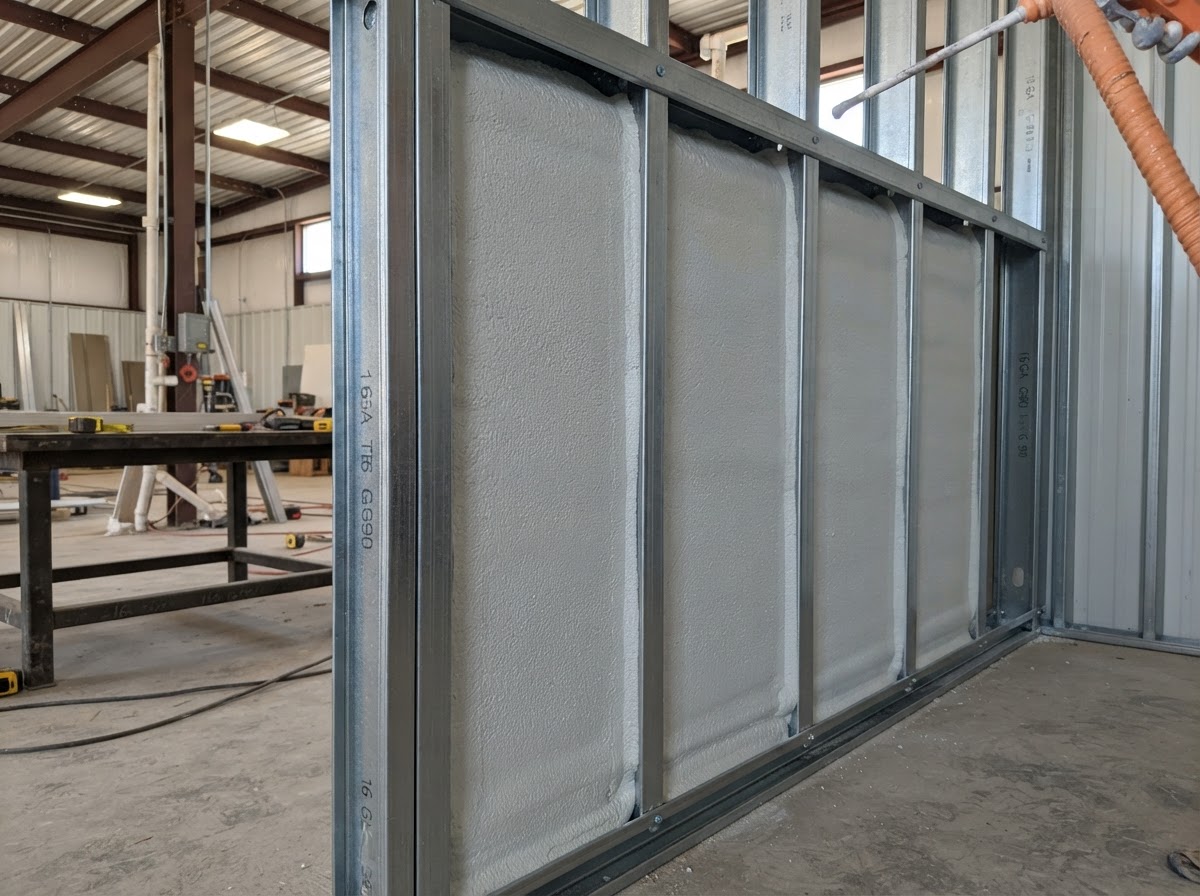
Jobsite preparation, ventilation, protective equipment, curing conditions, and re-entry procedures should follow the specific product requirements and project plan.
- 01
Project Consultation
We review your tiny home or ADU type, construction, and goals to scope the project.
- 02
Cavity & Assembly Review
We inspect the wall cavities, roof assembly, access, and moisture conditions.
- 03
Preparation & Protection
The structure interior and adjacent surfaces are protected.
- 04
Foam Application
Open-cell or closed-cell foam is applied to walls and roof per the plan.
- 05
Coverage & Trim
Applied depth is verified; foam is trimmed for interior finishes.
- 06
Cleanup & Re-Entry Guidance
We clean the structure and provide ventilation and re-entry guidance for the product used.
Tiny Home Insulation Across San Marcos & Central Texas
San Marcos Spray Foam Installation insulates tiny homes and ADUs for property owners across San Marcos, Hays County, and the surrounding Central Texas communities. Tiny houses, accessory dwelling units, and backyard living structures are increasingly common across the region, and Central Texas heat makes compact-structure insulation a frequent consideration for owners managing comfort and conditioning load.
Whether your tiny home is new construction or a renovation, the right approach depends on the construction, cavity depth, and conditioning strategy. We help property owners plan the envelope and select the appropriate foam type. Related residential and construction services:
Insulating a Tiny Home or ADU in San Marcos, TX?
Talk with San Marcos Spray Foam Installation about your tiny house, accessory dwelling unit, guest house, or backyard living structure. We help you plan the right envelope and foam selection for your compact structure.
Tiny Home & ADU Spray Foam FAQs for San Marcos Property Owners
Does spray foam make sense when wall cavities are shallow?
Yes. Closed-cell foam is often considered for shallow tiny-home wall cavities because it offers higher thermal resistance per inch in many products, helping achieve performance in limited depth. Open-cell foam may suit deeper framed cavities. The choice follows the cavity depth, use, and moisture strategy.
Is spray foam good for a tiny home or ADU?
Yes. Spray foam can be a strong insulation and air-sealing choice for tiny homes and ADUs when the foam type matches the construction and conditioning strategy. In a small structure, a tight, continuous envelope has an outsized effect on comfort and conditioning load.
Open cell or closed cell for a tiny home?
Both are used. Closed-cell foam is often considered for shallow walls and roof assemblies because of its higher performance per inch and lower vapor permeance; open-cell foam may suit deeper framed cavities. The choice depends on the cavity depth, use, and moisture strategy.
Can the roof and walls both be spray foamed in a tiny home?
Yes. Tiny home walls and roof assemblies can both be insulated with spray foam, depending on the construction and access. Roof assembly strategy—vented or unvented—must be planned with the assembly and moisture strategy, not by simply blocking ventilation.
Can an existing backyard structure be converted and insulated?
Yes, when the wall and roof surfaces are accessible and appropriate for the planned assembly. Renovations and backyard-structure conversions may have access limitations that shape the approach. We evaluate access and construction before recommending an approach.
How is tiny home spray foam priced?
Cost depends on the surface area, foam type, installed thickness, cavity depth, accessibility, preparation, and overall project scope. New-construction tiny homes and renovations may require different approaches that affect cost. Request a project-specific estimate for accurate pricing.
Insulating a Tiny Home or ADU in San Marcos, TX?
Talk with San Marcos Spray Foam Installation about your tiny house, accessory dwelling unit, guest house, or backyard living structure. We help you plan the right envelope and foam selection for your compact structure.